
Reviewed · SCUBA DIVING & DIVE COURSES
Open Water Diver Course
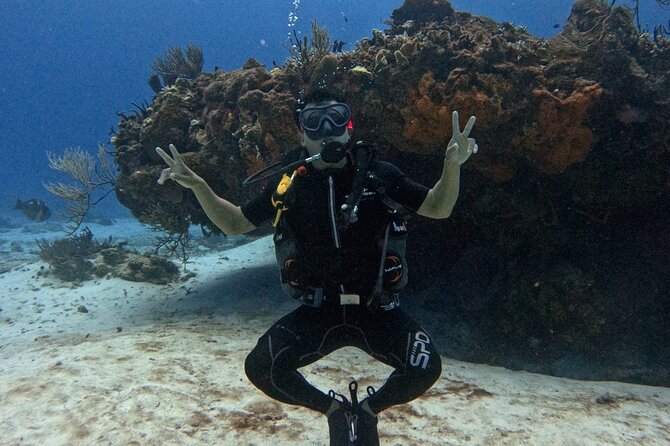
Getting certified in Cozumel should feel simple. This international Open Water Diver course earns a certification card that lets you go underwater up to 18 meters anywhere in the world, with extra room for younger students (ages 10–11 go to 12m). I like that the program is structured for real independence: you mix online and in-person theory with practical skill work in a shallow, coral-rich area. The main consideration is time and weather—each day runs about 5 hours, and the last day depends on good conditions.
A big plus here is the teaching style. Instructors including Aida and Eider are described as patient and safety-minded, and that matters when you’re learning buoyancy, equipment use, and how to handle your body underwater. It’s also set up as a private experience, so it’s only your group, and it’s offered in English—helpful if you want clear explanations without playing guessing games.
In This Review
- Key highlights you’ll feel quickly
- A real independence goal: what you earn, and why it matters
- The 3-day rhythm: shore skills first, then the reef day
- Day 1 and Day 2: theory and practical skills on a shallow coastal site
- Day 3: boat out for two reef sessions in Cozumel Marine Park
- Instructor coaching: why Aida, Eider, and Manuela keep coming up
- Aida: clear explanations and reassurance under pressure
- Eider and Manuela: supportive teamwork
- What you’ll learn underwater (without guessing games)
- Depth and limits: 18 meters is part of the curriculum
- Marine awareness: reefs aren’t a prop
- Where you start in Cozumel (and why location helps)
- Price and value: is $683.86 a good deal?
- Weather matters more than your schedule
- Who should book this course in Cozumel?
- Should you book?
- FAQ
- How many days is the Open Water Diver course?
- Where does the course take place?
- What depth can students reach?
- Is there online theory, or is it all in person?
- What happens on the first two days?
- What happens on the final day?
- Is the experience private?
- What language is instruction offered in?
- What’s the minimum age?
- What if weather is bad?
- Cancellation: can I get a refund?
Key highlights you’ll feel quickly
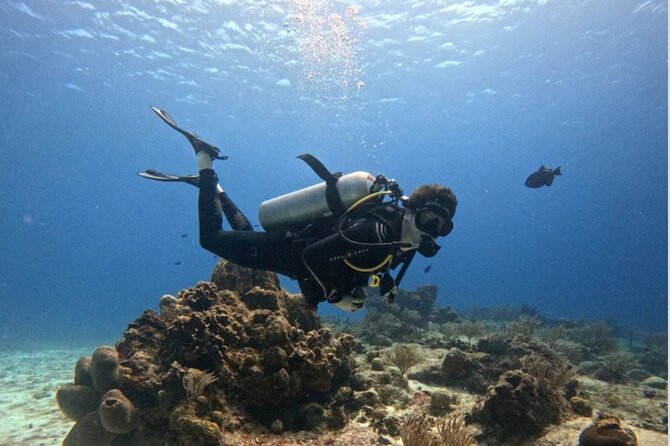
- International Open Water Diver certification card that supports going underwater up to 18m (12m for ages 10–11)
- 3-day format, with about 5 hours of activity each day
- Online + in-person theory, then hands-on practice in shallow coastal water
- A calm, safety-first coaching approach credited to instructors like Aida, Eider, and Manuela
- A boat day in Cozumel Marine Park, finishing with two reef sessions reaching 18m
- Private group setup with instruction in English
A real independence goal: what you earn, and why it matters
This course is built around a simple idea: you shouldn’t just get a one-off “look around” experience. You work toward becoming an independent Open Water Diver—someone who can handle the basics, understand their equipment, and behave responsibly in the marine environment.
The certification card is the headline: it allows you to go underwater to 18 meters anywhere in the world. That’s the part that makes it more than a local hobby session. I also like that age matters here—students age 10–11 train for the 12-meter limit, so the course is aligned with real-world certification rules.
If your goal is “I want to dive anywhere,” this is the right starting point. If your goal is only seeing reefs with zero training stress, you might find this course too much. But for people aiming at long-term scuba plans, it’s a strong foundation.
More Cozumel dive trips and first-timer courses
- Discover Scuba Diving in Cozumel Paradise Reef
★ 5.0 · 686 reviews - SeaTrek Underwater Helmet Diving Experience in Downtown Cozumel
★ 4.5 · 214 reviews - Cozumel Scuba Dive at Chankanaab
★ 5.0 · 153 reviews - Cozumel Shore Excursion: Mini-SUB Diving Adventure
★ 4.5 · 151 reviews - Cozumel: One Tank Scuba Dive and Full Chankanaab Park Access
★ 4.9 · 149 reviews
The 3-day rhythm: shore skills first, then the reef day
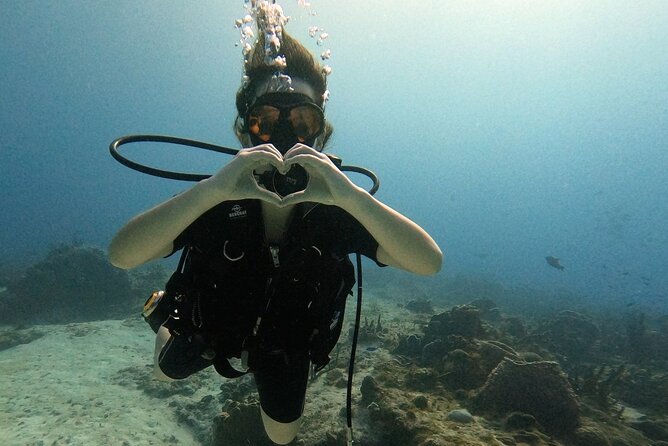
The course runs for 3 days, and each day is about 5 hours. It moves in a logical order: learn the theory, practice skills in shallow water, then apply it on open water reefs with deeper depth targets on the final day.
Day 1 and Day 2: theory and practical skills on a shallow coastal site
The first two days combine classroom-style learning and hands-on work. You’ll get theoretical instruction (part online, part in person) and then do practical sessions in a shallow area with corals and marine life.
This matters more than it sounds. Shallow training lets you get comfortable with:
- how the gear feels on your body
- breathing control
- basic buoyancy and stability
- responding to what’s happening around you underwater
Because the water is shallow and coral-rich, you can connect the skills to what you actually care about—seeing life—without starting your course at deep depths. One of the most consistent themes in feedback is that instructors take time to make sure you understand and feel safe.
Day 3: boat out for two reef sessions in Cozumel Marine Park
On the last day, you head out by boat to the Cozumel Marine Park. The plan is two reef sessions, reaching up to 18 meters.
This is the “moment of truth” day: the skills you practiced on shore have to work while you’re in a real reef environment. The route and conditions will depend on weather, so the school may adjust timing to keep everyone safe. The good part is that the goal is clear and you’re not guessing what you’re training for—you know it’s aimed at that 18m certification target.
Also, people mention that instructors point out interesting things underwater when they spot them. That kind of attention helps you connect the dots between skills and the living reef you came for.


Instructor coaching: why Aida, Eider, and Manuela keep coming up
In scuba training, teaching style is not a small detail—it’s the difference between feeling in control and feeling tense. The instructors here are repeatedly credited for patience and a calm, safety-first approach.
Aida: clear explanations and reassurance under pressure
Aida shows up in the feedback as a professional instructor who explains things well and checks that you understand. Another consistent point: reassurance. If you’re prone to nerves, a calming instructor can help you focus on breathing and buoyancy instead of panicking about what comes next.
Eider and Manuela: supportive teamwork
Eider and Manuela are also named as part of the teaching team, and the overall picture is teamwork—someone watching you, correcting technique, and making sure you feel confident as you move through each step.
There’s also an encouraging story theme: one student described overcoming fear with the help of the team. That doesn’t mean the course is “easy,” but it does suggest the school is willing to slow down when your brain needs extra time to catch up.
What you’ll learn underwater (without guessing games)
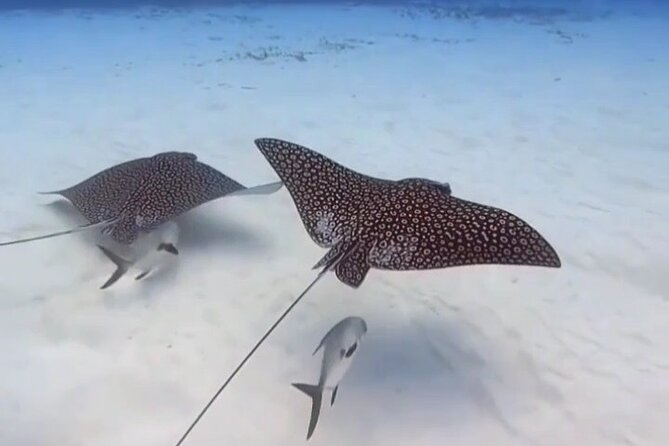
Even though the course is about reefs and scenery, it’s still training. The program includes getting to know:
- your equipment
- your body and how it behaves underwater
- the marine environment
You’ll likely spend your attention on fundamentals during the course, because the goal is safe, repeatable diving skills you can use later. This is why the certification is internationally recognized: you’re not just collecting memories—you’re building habits.
Depth and limits: 18 meters is part of the curriculum
The course is designed to reach 18 meters on the final day. For younger students (10–11), that limit is 12 meters. That’s important because it sets expectations. You’re not “hoping” for depth—you’re training toward it, with instruction and practice leading up to it.
Marine awareness: reefs aren’t a prop
The training includes learning about the marine environment. In practice, that usually means learning how to move responsibly and stay aware of what you’re doing while underwater. Cozumel reefs reward good buoyancy because it helps you enjoy the life without kicking up sediment or touching coral.
Where you start in Cozumel (and why location helps)
The meeting point is in central Cozumel, on Avenida 20 between Benito Juárez and 2 Nte, in the Centro area. The course ends back at the same meeting point.
That’s convenient for two reasons. First, you can plan your day without long transfers across the island. Second, if you need a quick break between segments, you’re not stuck commuting.
Operating hours listed run 9:00 AM–2:00 PM daily. Since each day is about 5 hours, you’ll want to plan your other activities around the course block.
Price and value: is $683.86 a good deal?
The price is $683.86 per person for a 3-day Open Water Diver course. On paper, it’s not cheap. In value terms, though, you’re paying for a full training arc, not a single outing.
Here’s what you’re getting for the cost, based on the course structure:
- Online + in-person theory, so you’re not learning everything on the clock
- Two full days of shallow-water practice with instruction
- A boat day with two reef sessions, including the final depth goal (18m)
- A certification card for internationally recognized training depth limits
- Instruction in English and a private setup for your group
- A mobile ticket
To judge value, ask yourself what you’d pay for the same package if you had to piece it together: instructor time, equipment handling coaching, structured training days, and the boat day. When you price it out that way, this course starts to look like a solid deal—especially if you want a serious certification rather than just a reef tour.
If you’re only in Cozumel for a short stop and you just want snorkeling, you may spend money faster than you planned. But if you’re thinking beyond Cozumel and want the card that lets you go underwater elsewhere later, this is the kind of investment that pays off.
Weather matters more than your schedule
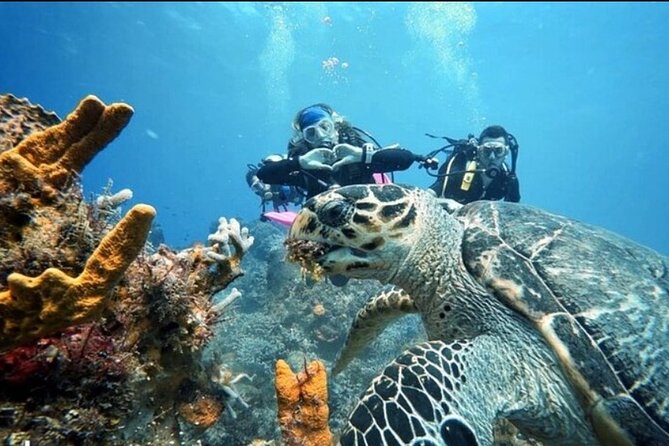
The experience requires good weather. If it’s canceled due to poor conditions, you’ll be offered a different date or a full refund.
That means you should avoid locking in other tight plans on your last day. Cozumel can be great, but sea conditions change. The school has a clear policy for weather-related cancellations, which is reassuring because it reduces the risk of a bad day at the last minute.
Who should book this course in Cozumel?
This Open Water Diver course is a great fit if you:
- want your first official scuba certification
- plan to dive in other countries later
- want a course that prioritizes independence and safety skills
- prefer English instruction
- like the idea of a private training setup rather than a mixed crowd
It may be less ideal if you:
- only want a quick reef visit with no training goal
- can’t spare 3 days (each about 5 hours)
- feel uneasy about training fundamentals and need a more casual, sightseeing-only experience
If you’re nervous, that’s not automatically a deal-breaker here. The teaching style is repeatedly associated with patience and calm coaching, which is often what makes the difference for first-time students.
Should you book?
Yes, I’d book it if your goal is real certification and you want your training to match the international card promise—especially with instructors like Aida, Eider, and Manuela described as supportive and security-minded.
I’d skip it only if your main priority is pure sightseeing and you don’t care about getting certified, or if your schedule leaves no room for weather shifts on the boat day.
If you’re ready to learn the skills that let you enjoy reefs later—without turning every future trip into a nervous repeat of your first day—this 3-day Open Water Diver course in Cozumel is a smart choice.
FAQ
How many days is the Open Water Diver course?
It’s 3 days total, with each day running about 5 hours.
Where does the course take place?
The training starts at a meeting point in central Cozumel (Avenida 20, Centro) and includes shore practice plus a final day by boat in the Cozumel marine park.
What depth can students reach?
The course is designed for up to 18 meters. Students aged 10–11 go down to a maximum of 12 meters.
Is there online theory, or is it all in person?
There’s a theoretical part that includes online and in-person instruction.
What happens on the first two days?
The first two days include theoretical and practical classes on the coast in a shallow area with coral and marine life.
What happens on the final day?
On the last day you go out by boat for two reef sessions in the Cozumel marine park, reaching the course depth target.
Is the experience private?
Yes. It’s listed as a private activity, meaning only your group participates.
What language is instruction offered in?
The course is offered in English.
What’s the minimum age?
The minimum age is 10 years.
What if weather is bad?
The experience requires good weather. If it’s canceled due to poor weather, you’ll be offered a different date or a full refund.
Cancellation: can I get a refund?
Yes. You can cancel up to 24 hours in advance of the start time for a full refund, based on local time.
More Tanks Down Off Cozumel
- Discover Scuba Diving in Cozumel Paradise Reef★ 5.0 · 686 reviews
- SeaTrek Underwater Helmet Diving Experience in Downtown Cozumel★ 4.5 · 214 reviews
- Cozumel Scuba Dive at Chankanaab★ 5.0 · 153 reviews
- Cozumel Shore Excursion: Mini-SUB Diving Adventure★ 4.5 · 151 reviews
- Cozumel: One Tank Scuba Dive and Full Chankanaab Park Access★ 4.9 · 149 reviews
Latest Cozumel tours we have reviewed
Scuba Diving & Dive Courses, compared.
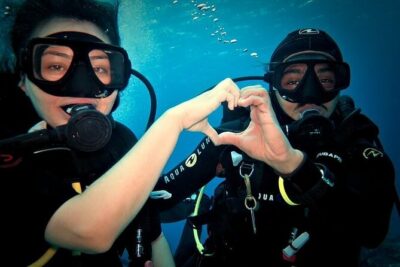 ★ 5.0Discover Scuba Diving in Cozumel Paradise Reef686 reviews
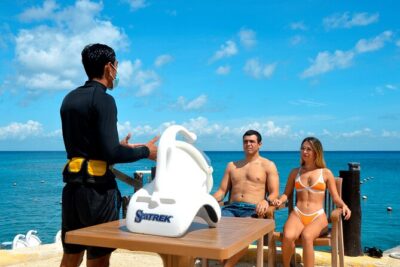 ★ 4.5SeaTrek Underwater Helmet Diving Experience in Downtown CozumelFrom $79214 reviews
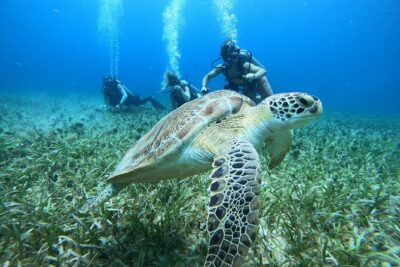 ★ 5.0Cozumel Scuba Dive at ChankanaabFrom $85153 reviews
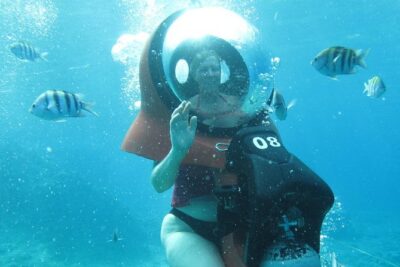 ★ 4.5Cozumel Shore Excursion: Mini-SUB Diving AdventureFrom $89151 reviews
 ★ 4.9One Tank Scuba Dive and Full Chankanaab Park AccessFrom $63149 reviews
 ★ 5.02 Tank Morning Dive: Scuba Diving in CozumelFrom $160148 reviews
 ★ 4.52 dives in Cozumel (for certified divers only)From $110141 reviews
 ★ 5.0Discover Scuba DivingFrom $95139 reviews
Browse the lists this tour appears in